 ISAAC WOOTEN
The All-Table System
Turning a chaotic tournament floor into one connected, real-time event — for operators, players, spectators, and broadcast.
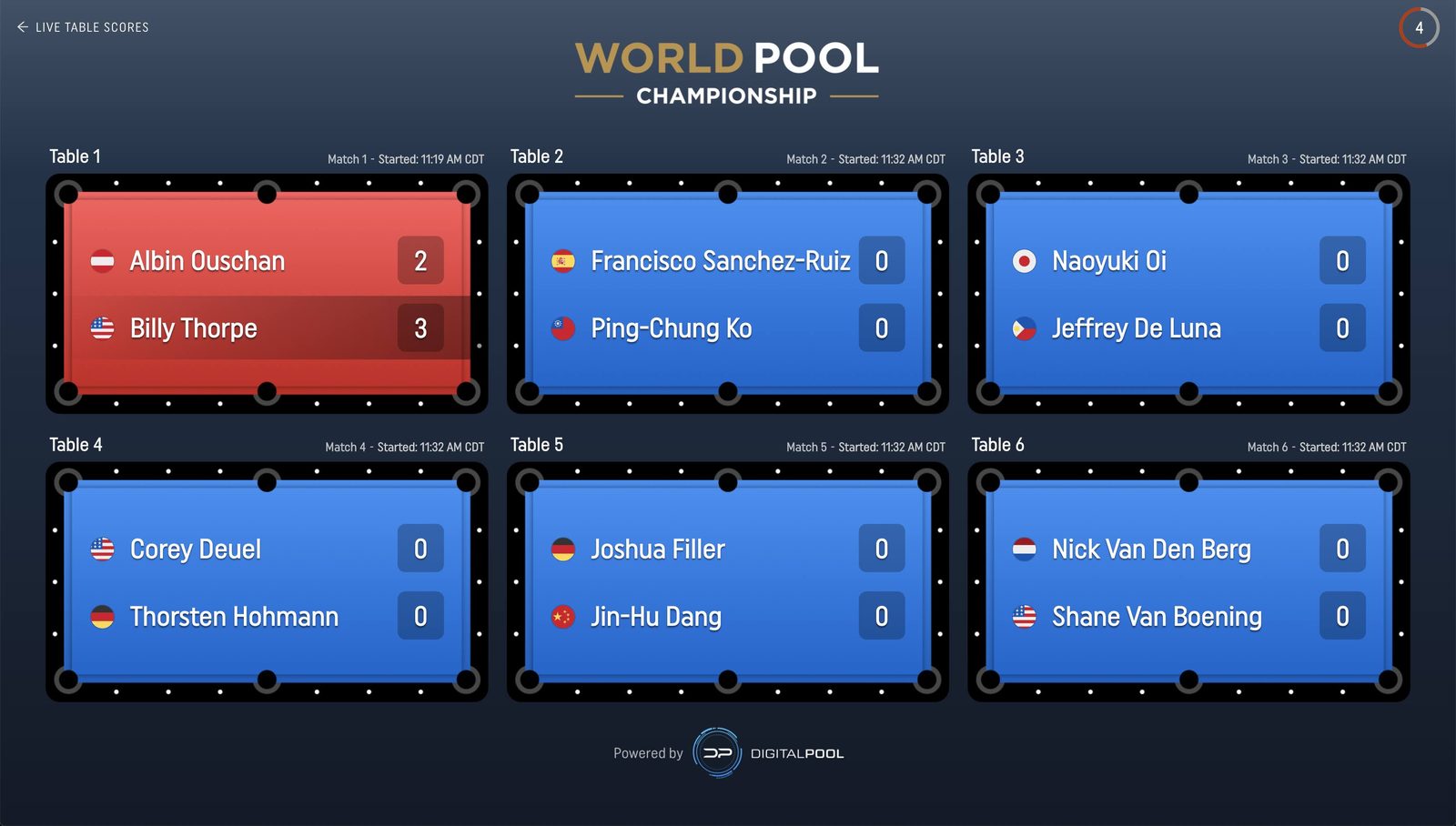
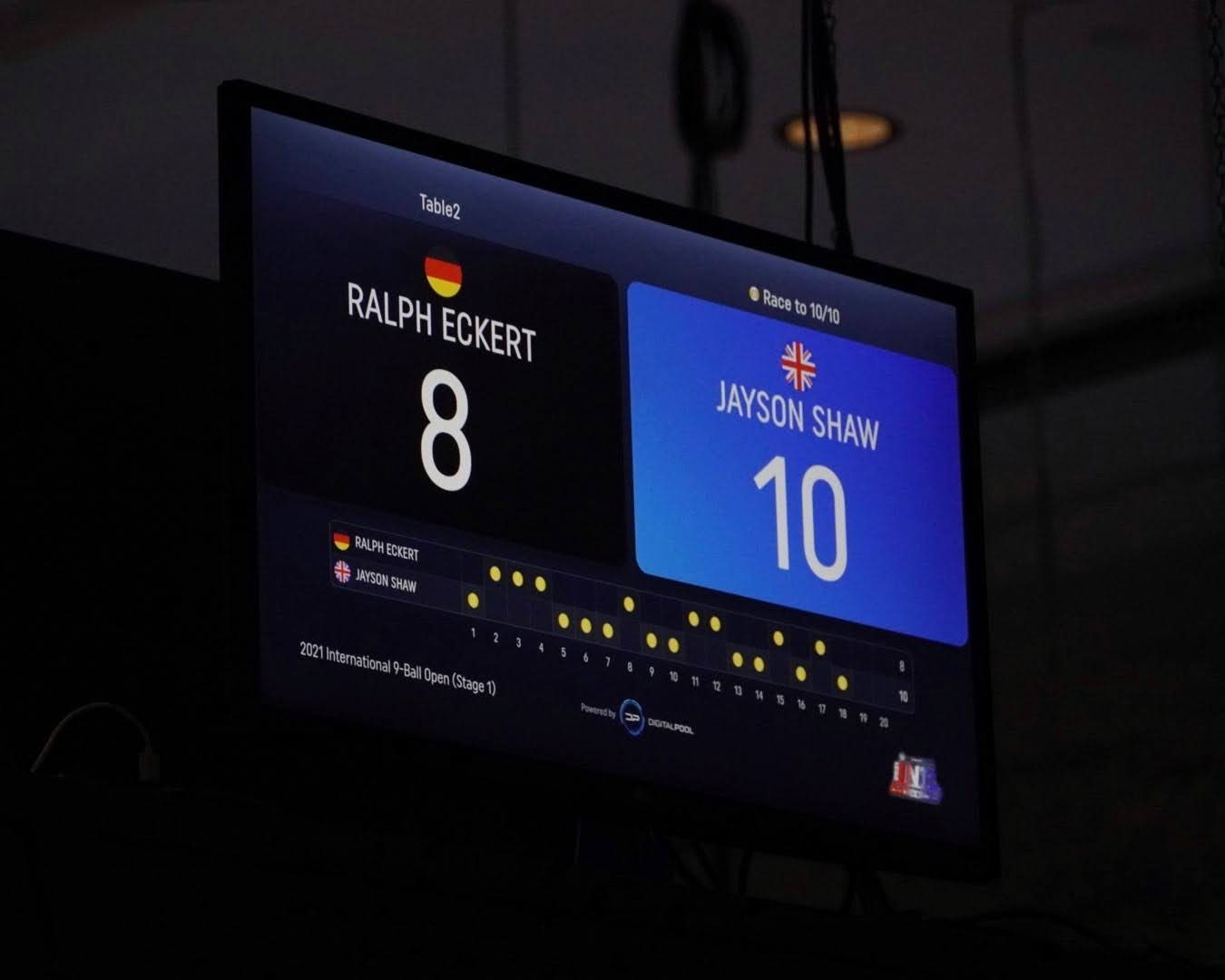
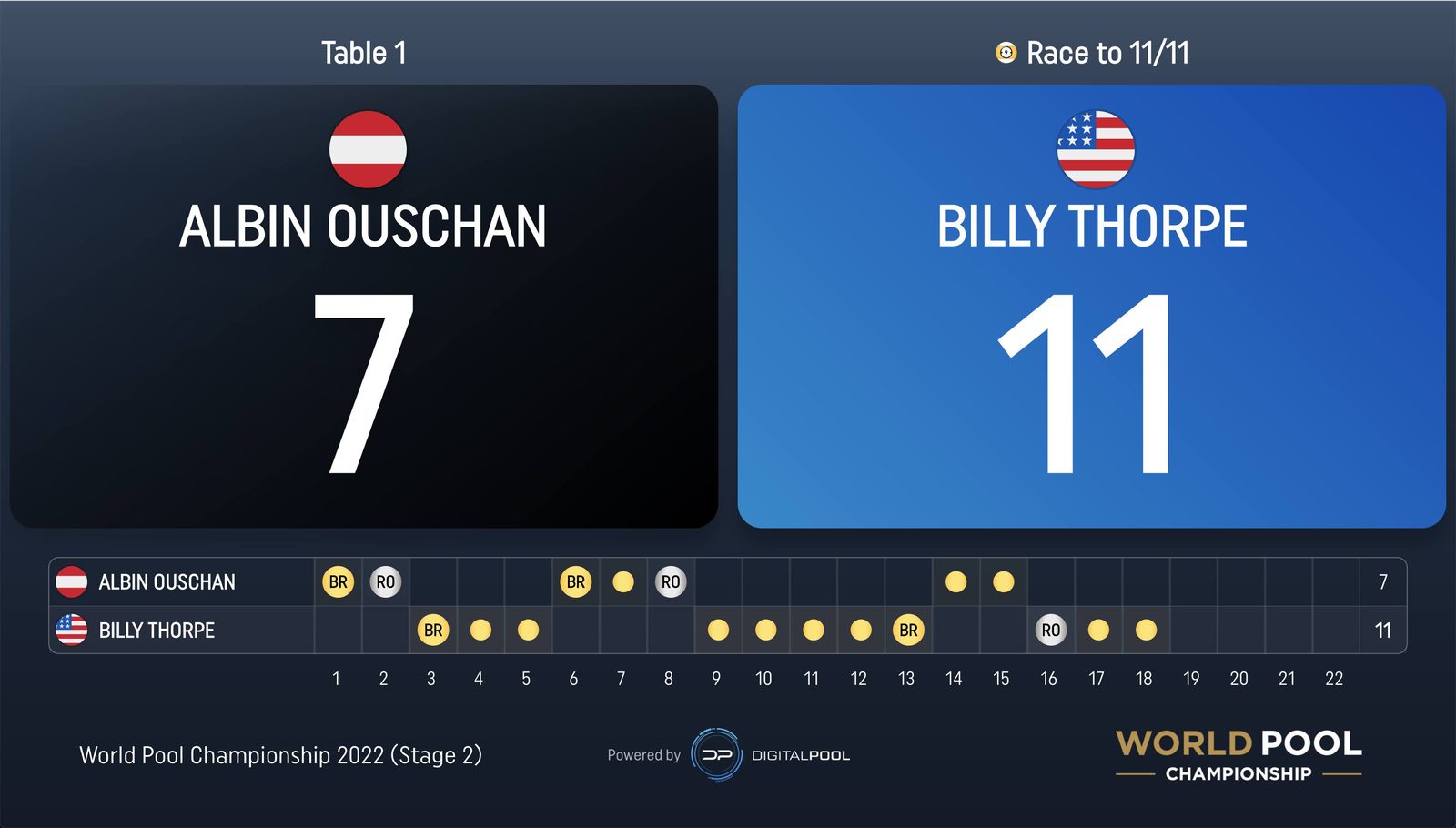
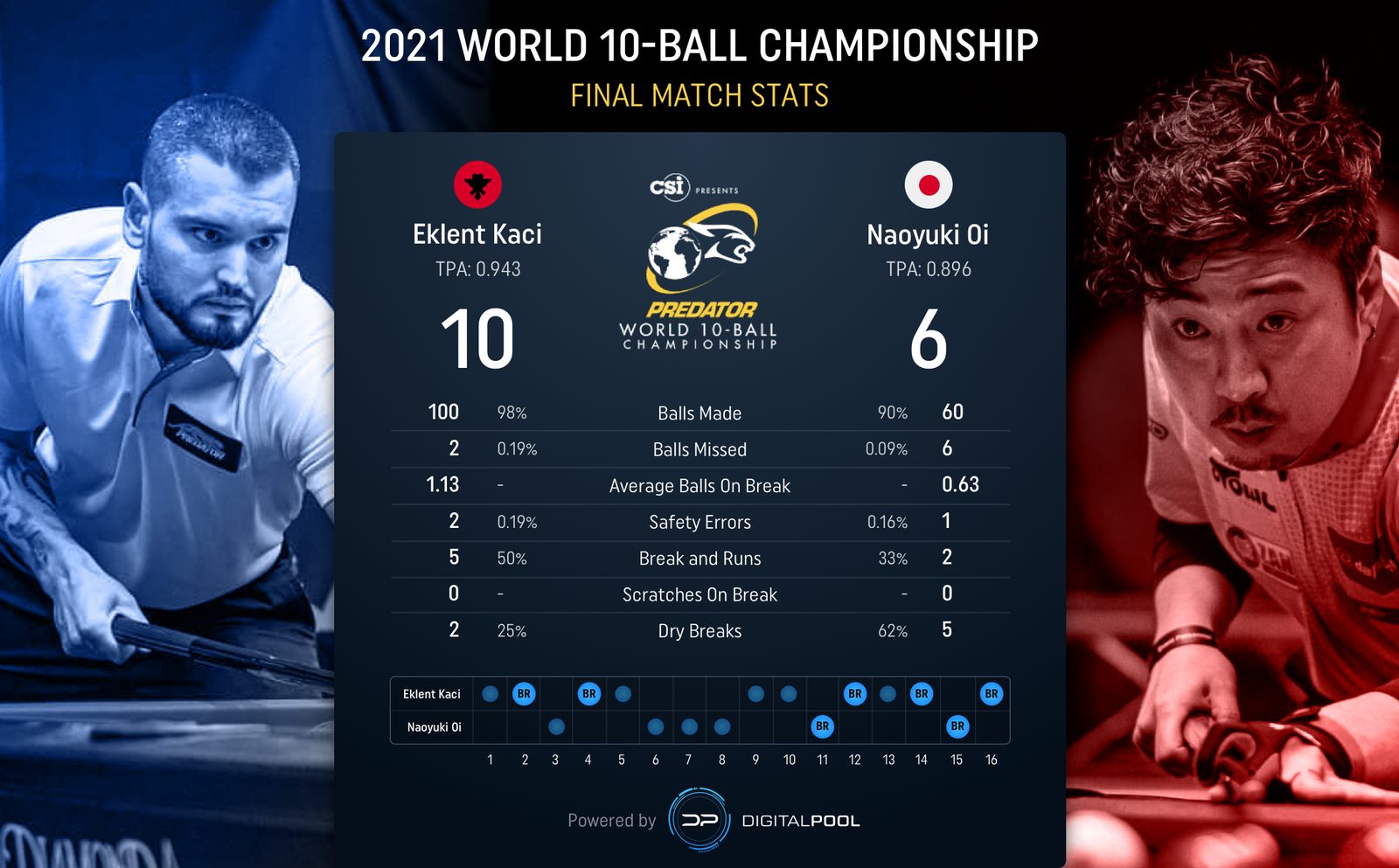
One live data model became five surfaces — operator console, table displays, room board, player apps, and broadcast — driving 91,848 tournaments, 3.7M results auto-reported to FargoRate, and graphics on the World Pool & World 10-Ball Championships, with zero duplicate entry for operators.
Competitive pool runs on tournaments — from a Tuesday-night bar league to the World Pool Championship. Every one is the same shape: dozens of matches across many tables, run by one or two operators, often with a whiteboard, a stack of paper brackets, and a microphone.
Digital Pool set out to put that entire operation online — and then to make every table in the room part of one live system. The all-table system is the heart of it: the layer that takes a noisy floor of independent tables and turns it into a single, legible, real-time event.
A multi-table tournament is four problems happening at once, for four different people:
Operators are overloaded
Drawing brackets, assigning tables, calling players, taking entry fees, and reporting results — by hand, under time pressure, all night.
Players are in the dark
The number-one question at any event is "when and where am I up?" Miss the call and you can be forfeited. Most of the night is anxious waiting.
Spectators & streams have nothing
No live scores in the room, no standings, and broadcasts cobbled their graphics together by hand — if at all.
Ratings lag and drift
Results were typed into FargoRate after the fact — slow, manual, and error-prone, which players' official ratings depend on.
- Flaky venue Wi-Fi
- Dozens of tables at once
- Non-technical operators
- Real money & ratings at stake
- Dim, loud, crowded halls
- Web · iOS · Android · in-venue displays
- Zero tolerance for a wrong score
- Has to be runnable solo
01 · One source of truth
The match is the truth. Every surface — player app, table display, room board, broadcast overlay, FargoRate, payout — is just a view of the same live state. Score once; everything updates.
02 · Legible at a glance
A player walking past a screen across a dark hall should read their status in under two seconds. Big numbers, clear state, no chrome.
03 · Zero-training operations
An operator should run their first event without a manual. The console has to teach itself in the moment.
04 · Design out the anxiety
The real pain isn't scoring — it's uncertainty. So the system's job is to answer "when am I up?" before the player has to ask.
One live model, expressed as five surfaces — each tuned to a different person and a different distance from the table:
Operator console
Brackets, table assignments, and one-tap scoring built so a single operator can run a full event.
Per-table displays
A screen at every table showing the live match, names, race, and rack history — readable from across the room.
The room board
Every table at a glance for spectators and staff — the all-table view that makes the whole floor legible at once.
Player experience
Live brackets and standings on web, iOS, and Android, plus text notifications so players know exactly when and where they're up.
Broadcast layer
Scoreboard overlays and end-of-match stats generated from the same data — turning any stream pro, with no manual graphics work.
Connected systems
Automatic FargoRate reporting, digital payments for entries and payouts, and AI-predicted match times — all off the one model.
One data model, many views. The hardest and most important call was refusing to build per-surface tools. Modeling the tournament once — and treating the table display, the app, the overlay, and FargoRate as renderers of the same state — is what makes the system feel instant and keeps operators from entering anything twice.
"When am I up?" is a UX problem, not just a prediction one. Rather than only showing a queue, the system predicts match start times and pushes them to players by text. Meeting players over SMS — not app-only — matters, because nobody stares at an app for six hours in a pool hall.
Broadcast as a first-class output. Treating live overlays and stats as a core surface (not an afterthought) turned every stream into a polished one and made events sponsor- and spectator-ready — used on stages like the World Pool Championship and the World 10-Ball Championship.
From a single tournament in 2020 to thousands run every month — 25M+ lifetime views and 2.74M players across the US, Vietnam, Canada, Taiwan and beyond, on the screens of major events worldwide.
The leverage was in the model, not the screens. Once the match was the single source of truth, every new surface — a display, an overlay, a rating integration — got cheaper and more consistent, and operators stopped doing duplicate work. The lesson I keep applying: find the one object the whole system is really about, design that well, and let the interfaces be honest views of it.
Digital Pool is being rebuilt AI-native — folding prediction, assistance, and automation deeper into the core so the system doesn't just record the event, it helps run it.
Visit digitalpool.com ↗